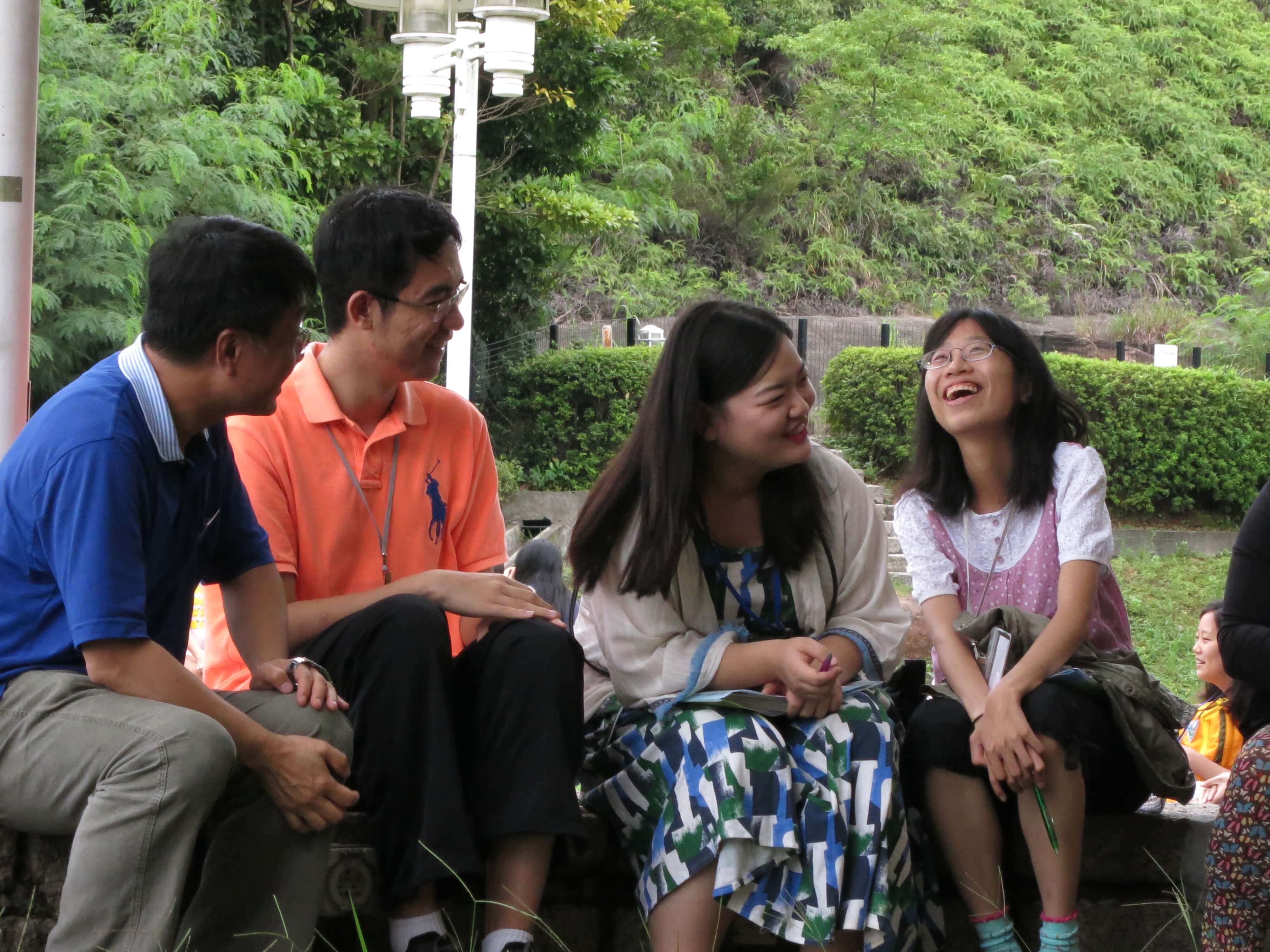
Students studying RPE programme will be benefited from the writing, public presentation, and critical thinking skills learnt from the programme, as well as close student-teacher relationship which is unique in our Department.
In order to realize the mission of the Department, the B.A. (Hons) in Religion, Philosophy and Ethics Programme emphasizes the following general aims:
To equip students with reasoning and analytical skills;
The main objectives of the B.A. (Hons) in Religion, Philosophy and Ethics programme are as follows:
After having completed the B.A. (Honours) in Religion, Philosophy and Ethics Programme, the students should be able to:
1. First Ever RPE Programme in Asia for the World
2. Four Study Areas
3. Critical Thinking
4. Value Analysis
5. Excellence in Liberal Arts Education
All students should complete the following core courses which will be served as the pre-requisite courses for taking Level 4 RELI courses in the respective study area(s), or they should enroll in them as the co-requisite courses for taking other Level 4 RELI courses simultaneously. This arrangement will be applicable to students (both Major and Non-Major students) admitted from AY2024/25 onwards.
This course examines the diverse relations between drama and philosophy, contributing to quality education by fostering analytic and critical thinking. Students will study great plays in the Western tradition with philosophical themes such as suffering, death, justice and the foundations of a fair society, free will, the meaning of life, etc. The course covers ancient Greek tragedies, Shakespeare, and the Theatre of the Absurd. Students will study these plays and learn to interpret them as works of philosophical investigation, developing key learning outcomes in analytical reasoning, interpretation, and literacy skills as they think critically about the dramas and their ideas. They will learn to appreciate how philosophical ideas affect drama and how drama communicates philosophical ideas. At the discretion of the instructor additional modules may be included to study opera, film, philosophy of drama, philosophical critiques of drama, or the effect of the dramatic literary form in shaping philosophical content. Along with the lecture-tutorial format, selected videos may be included, and other activities may be added at the instructor's discretion to enrich the learning environment.
This course offers an anthropological and ethnographic exploration of how religious rituals and everyday practices shape social inclusion, cultural heritage, and identity among Hong Kong’s diverse ethnic and religious communities. As a cosmopolitan city built on migration, Hong Kong serves as a critical site for understanding how minority and majority populations negotiate belonging, difference, and coexistence through religion.
Adopting a comparative and grounded approach, the course examines three interconnected domains of religious life:
1. Domestic Spheres: How gendered divisions of labor, family hierarchies, and moral economies are produced and contested through daily rituals in Chinese religious traditions—including Confucianism, Daoism, Buddhism, and popular religion. Ethnographic attention is given to home altars, ancestral rites, and the labor force participation of women and elders in transmitting intangible heritage.
2. Sacred Sites and Social Inclusion: A spatial ethnography of religious sites—Christian churches (Catholic and Protestant), temples, mosques, synagogues, and Hindu and Zoroastrian prayer spaces—analyzing how these sites function as arenas of intercultural encounter, ethnic boundary-making, and religious minority resilience in a predominantly Chinese urban landscape.
3. Festivals and Public Rituals: How religious festivals connect local communities to each other and to transnational religious networks. Special focus on religious minorities such as Muslims, Jews, Hindus, and Zoroastrians, and how their public celebrations navigate visibility, heritage preservation, and social inclusion in a migrant city.
The course places Hong Kong in comparative perspective with other migrant cities (e.g., London, Singapore, Vancouver) and overseas Chinese communities, examining how diaspora, heritage, and religious pluralism are reshaped by migration, urban spaces, and ethnic conflicts.
To address these questions, this course examines (i) how AI relates to specific visions of the good life, including whether AI supports or makes them more difficult to achieve, and (ii) how different visions of the good life can inform our responsible technological innovation, including the design, use, and social impacts of AI-driven technologies. The course explores philosophical theories of the good life and related concepts such as, digital well-being, psychological well-being and mental health, meaningful life, sustainability.
Students will study philosophical theories of the good life alongside religious and cultural visions from traditions such as Christianity, Confucianism, Daoism, Buddhism, Indigenous beliefs, and transhumanism. The course considers how these diverse perspectives can contribute to more inclusive, sustainable, and ethically responsible approaches to AI technologies. Through critical reflection and practical application, students will learn about the challenges posed by AI to human flourishing and will engage in hands-on work to design AI-based products in relation to a specific vision of the good life.
To address these questions, this course examines (i) how AI relates to specific visions of the good life, including whether AI supports or makes them more difficult to achieve, and (ii) how different visions of the good life can inform our responsible technological innovation, including the design, use, and social impacts of AI-driven technologies. The course explores philosophical theories of the good life and related concepts such as, digital well-being, psychological well-being and mental health, meaningful life, sustainability.
Students will study philosophical theories of the good life alongside religious and cultural visions from traditions such as Christianity, Confucianism, Daoism, Buddhism, Indigenous beliefs, and transhumanism. The course considers how these diverse perspectives can contribute to more inclusive, sustainable, and ethically responsible approaches to AI technologies. Through critical reflection and practical application, students will learn about the challenges posed by AI to human flourishing and will engage in hands-on work to design AI-based products in relation to a specific vision of the good life.
Interested applicants can admit into the programme via the following channels:
# “Attained” in Citizenship and Social Development will not be included in the admission score calculation.
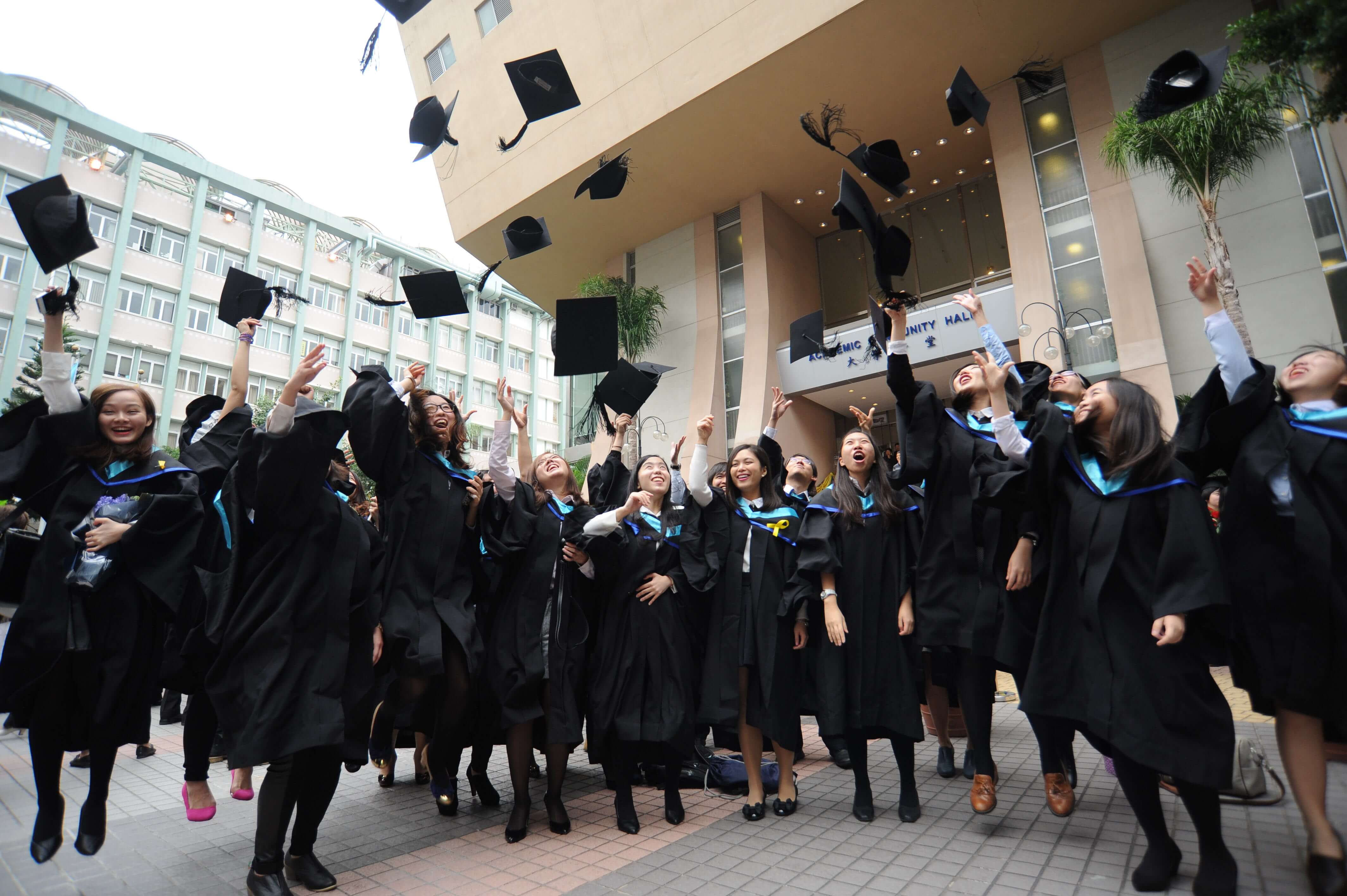
The programme provides high-quality training which enables students to engage in independent academic research. Graduates in RPE will be well-equipped for postgraduate studies. Graduates can choose a career not only in teaching Ethics and Religious Studies (after obtaining PGDE/DipEd from a qualified tertiary institution), but also in cultural affairs, publication business, religion-related social service agencies, administration of the civil service and the business sector.
Recently the whole concept of the function of higher education has changed. The significant role of higher education is the training of analytical and critical thinking, creativity and flexibility, and a broad base of knowledge. Employers in Hong Kong are looking for these qualities rather than hard skills in a very narrow scope which may become obsolete in few years. Nowadays, graduate with good training in Religion, Philosophy and Ethics can go into a wide variety of fields for career development. According to the employment survey conducted by the Office of Student Affairs, the mean monthly salary of our 2022 graduates is HK$18,624, ranking the forth among all programmes offered by the Faculty of Arts.